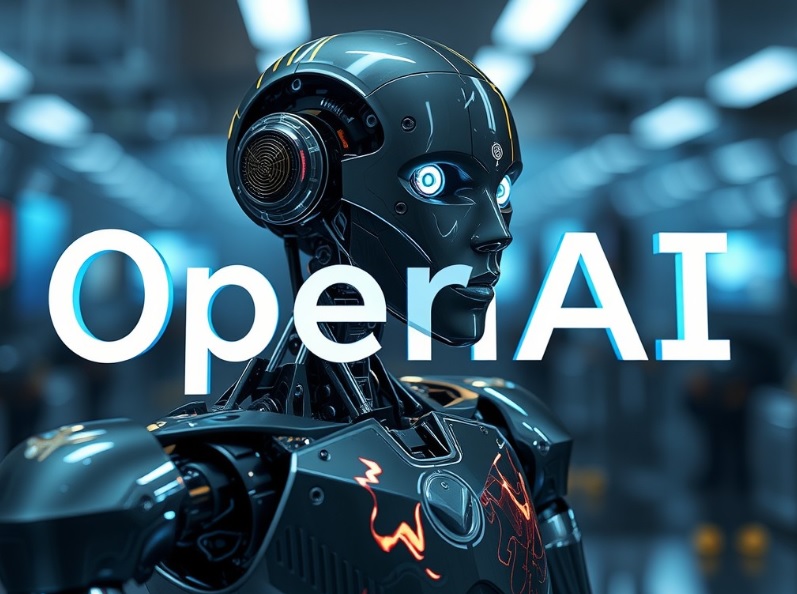
OpenAI, renowned for its advancements in artificial intelligence, particularly with large language models like GPT, is reportedly restarting its humanoid robot project. While the company hasn't officially confirmed the specifics, multiple sources suggest a renewed focus on integrating its cutting-edge AI capabilities with physical robots. This move signifies OpenAI's ambition to extend its influence beyond the digital realm and into the physical world.
OpenAI's previous foray into robotics included the development of Dactyl, a robotic hand capable of dexterous manipulation, and Roboschool, an open-source simulation platform for training robot AI. Despite disbanding its robotics team in 2021 to prioritize generative AI, the company's recent investments in robotics startups like 1X, Figure, and Physical Intelligence, coupled with new job postings for robotics engineers, strongly indicate a revived interest in this field. These job postings emphasize OpenAI's intention to design and integrate robotic systems from scratch, with the ultimate goal of achieving full-scale production. One listing even mentions experience with mechanical systems intended for large-scale production and testing, and another highlights the importance of the role in realizing robotics prototypes and scaling them to full production. The company is actively seeking contract workers to test these prototypes, some of which are hinted to have limbs.
This renewed focus aligns with OpenAI's broader ambition of achieving Artificial General Intelligence (AGI). Humanoid robots could serve as valuable platforms for testing and refining AGI in real-world scenarios. The company envisions robots capable of operating in dynamic environments, performing a wide array of tasks, and interacting seamlessly with humans. OpenAI's expertise in large language models could be instrumental in enabling natural communication and problem-solving capabilities in these robots.
The development of custom hardware, including AI inference chips in collaboration with Broadcom, further supports this endeavor. Caitlin Kalinowski, former head of hardware for Meta's AR glasses, now leads OpenAI's robotics and consumer hardware division, underscoring the company's commitment to this area.
OpenAI's venture into humanoid robotics places it in direct competition with established players like Tesla, Boston Dynamics, and Figure, as well as other tech giants exploring this space. While some analysts suggest collaboration with existing robotics companies might be a more strategic approach, OpenAI appears to be pursuing in-house development to maintain greater control over its technology and integration with its AI models.
This move presents both opportunities and challenges for OpenAI. While the company possesses significant AI expertise, the complexities of humanoid robot development, including hardware design, motion control, and power management, are substantial. Moreover, ethical considerations surrounding the deployment of advanced robots will need careful attention.
The potential impact of OpenAI's humanoid robot project is far-reaching. Successful development could revolutionize industries like manufacturing, logistics, and healthcare, while also transforming daily life through household robots. However, the timeline for realizing these ambitious goals remains uncertain. As OpenAI continues to invest in and develop this technology, the coming years will be crucial in determining its success and shaping the future of humanoid robotics.


