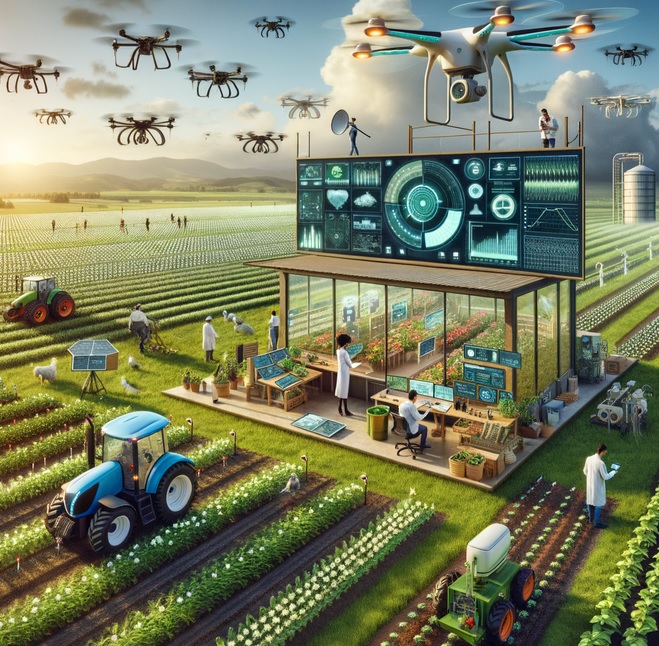
The Use of AI and Robotics in Agriculture: A Technological Harvest
The convergence of Artificial Intelligence (AI) and robotics is transforming agriculture, offering powerful tools to address challenges related to efficiency, sustainability, and food security. This article explores the growing role of AI and robotics in agriculture, examining their current applications, potential benefits, and the challenges that lie ahead.
AI's Expanding Role in Agriculture:
AI algorithms are being deployed across various agricultural operations:
- Precision Crop Management: AI analyzes data from sensors, drones, and satellite imagery to provide insights into soil health, crop growth, and potential disease outbreaks. This enables farmers to optimize irrigation, fertilization, and pest control, minimizing resource waste and maximizing yields.
- Predictive Analytics: AI algorithms can predict weather patterns, crop yields, and market prices, enabling farmers to make informed decisions about planting, harvesting, and sales.
- Disease and Pest Detection: AI-powered image recognition systems can identify early signs of disease or pest infestations, allowing for timely interventions and preventing widespread damage.
- Livestock Management: AI can monitor animal health, behavior, and feed intake, providing valuable insights for optimizing animal welfare and productivity.
Robotics in the Field:
Robotics are increasingly being used to automate labor-intensive tasks in agriculture:
- Automated Planting and Harvesting: Robots can plant seeds and harvest crops with greater precision and speed than traditional methods, reducing labor costs and improving efficiency.
- Weed Control: Robotic weeders can identify and remove weeds without the use of herbicides, reducing chemical inputs and promoting sustainable farming practices.
- Spraying and Fertilization: Robots can apply fertilizers and pesticides with greater precision, minimizing environmental impact and maximizing effectiveness.
- Drone Technology: Drones equipped with cameras and sensors can monitor crop health, survey fields, and apply pesticides, providing a cost-effective and efficient alternative to traditional methods.
Synergies between AI and Robotics:
The combination of AI and robotics creates powerful synergies:
- Intelligent Automation: AI algorithms can guide robots to perform complex tasks autonomously, such as navigating fields, identifying and picking ripe fruit, and adapting to changing conditions.
- Real-time Decision Making: AI can process data from robots and other sources in real-time, enabling rapid responses to changing conditions and optimizing resource allocation.
- Improved Precision and Efficiency: AI-powered robots can perform tasks with greater precision and efficiency than humans, reducing waste and maximizing yields.
Challenges and Considerations:
Despite the significant potential, several challenges need to be addressed:
- High Initial Investment: The cost of implementing AI and robotics can be a barrier for smaller farms.
- Technical Expertise: Operating and maintaining these technologies requires specialized skills and training.
- Data Security and Privacy: The collection and use of agricultural data raise concerns about data security and privacy.
- Ethical and Societal Implications: The potential impact on rural employment and the ethical considerations of autonomous systems need careful consideration.
The Future of AI and Robotics in Agriculture:
The future of agriculture is increasingly intertwined with AI and robotics. Ongoing advancements promise:
- Swarm Robotics: Groups of robots working collaboratively to perform complex tasks.
- Autonomous Farms: Fully automated farms managed by AI and robots.
- Personalized Agriculture: Tailored farming practices optimized for specific crops and environmental conditions.
Conclusion:
The integration of AI and robotics in agriculture offers a transformative opportunity to enhance productivity, sustainability, and food security. By addressing the challenges and embracing these technologies, we can cultivate a more efficient, resilient, and sustainable agricultural system for the future.